Kanal-Centre Pompidou
The Place that Speaks Back.
article
Reading time: 10 min Text by: Gaetano Licata & Madeleine Kate McGowan for NXT Magazine
What if a museum wasn’t a monument, but a membrane? What if culture didn’t land on a neighbourhood from above, but grew sideways, through whispers, encounters, stories, and water? This is not a manifesto for an institution. It is a proposal for listening — to bricks, to tides, to people, to the ghosts that anchor a place.
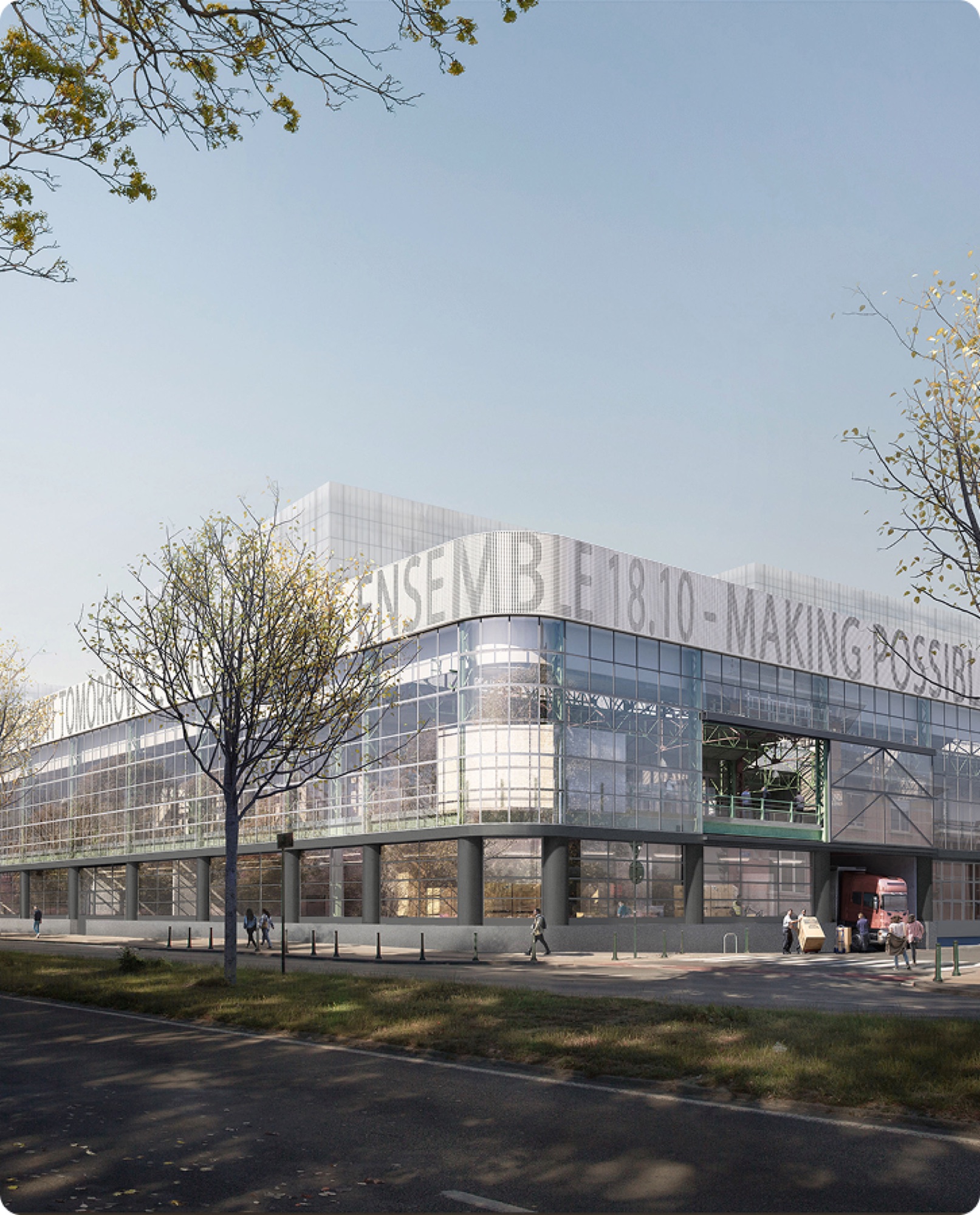
— A Museum in the Making
At the heart of Brussels, just beyond the central boulevards, lies a district that many maps forget and many clichés flatten. The Northern Quarter ; between the buzz of the city centre and the murmurs of Molenbeek, Ribaucourt, and Yser ; is not a blank canvas. It is a dense, layered, polyphonic place, rich in migration, rhythm, resistance, and resilience.
This is where this museum is taking shape ; not just as a building, but as one of Europe’s most ambitious contemporary art museums. A behemoth of cultural infrastructure emerging from a former Citroën garage, nestled along a neglected canal, surrounded by communities that have never waited for art to arrive to create meaning. We knew that a museum bearing a prestigious name, hosting exhibitions by internationally renowned artists, would inevitably attract crowds. That was never the problem. But the question was: what kind of presence would it embody? We were not interested in building a ticket-selling machine ; a gleaming temple of culture parachuted into complexity. We wanted to craft something anchored. Something timely. Something that belonged.
Not a museum that speaks at the city, but one that listens to it, responds to it, transforms with it. Not a brand, but a bond ; connecting institution, canal, neighbourhood and public through a shared, evolving language. That was the starting point of this project ; a collaboration between Stoëmp, NXT bureau, and Blurbs, joined by an unusual, deeply engaged crew: local artists, schoolteachers, sanitation workers, youth from nearby quartiers, urban ecologists, and researchers in climate law. Together, they imagined a communication strategy not to advertise the museum, but to root it ; in soil, in stories, in shared futures.
This is the anatomy of that strategy.
01
02
03
04

05
06
07
08
09